Showing posts with label reading workshop. Show all posts

Sunday, December 11, 2016

Remembering Kathleen Tolan

I had the honor of listening to and learning from Kathleen Tolan at numerous workshops at TCRWP for about the past 15 years.  When I heard the tragic news on Sunday, December 4th that she passed away in her sleep the night before, I was heartbroken and shocked.  I did not know she was sick so her passing took me by surprise.  I immediately thought of all the strategies she taught me over the years and how she not only impacted my instruction, but also impacted my students' learning over all these years by making me a better teacher.

I have notebooks full of my notes from TCRWP workshops dating back to 2002 so I began to look through them this weekend to remember some of the strategies I learned sitting in Kathleen's workshops. To honor and remember Kathleen Tolan, I am dedicating this post to her and sharing some highlights from her workshops dating back to 2003.

Historical Fiction:
Kathleen loved Freedom Summer by Deborah Wiles and used it as a mentor text and read aloud whenever she was presenting a workshop for a historical fiction unit.  She was the one who introduced me to Freedom Summer on April 5, 2003 and it has been my favorite historical fiction picture book since that day.

At this workshop, I learned:
  • it is important for students to think about how the setting is affecting the plot and character's actions/behaviors since it is based on a period in history. 
  • students need to pay attention to clothing, objects, daily life, how characters speak and live because these clues can help students piece together information to find out more about the time period. 
  • to teach students how to use nonfiction texts to help them learn more about the time period of their historical fiction book.  
  • to teach students there is more than one story and event in each time period (i.e. slavery was not the only issue during the Civil War time period). 
  • to launch the unit by choosing one time period and sharing 5-6 short texts with students for that time period.  
Comprehension Strategy Instruction: 
Kathleen was so passionate about teaching reading and loved sharing her tools and strategies with others.  At a Saturday Reunion workshop on 10/18/03, I learned multiple strategies to teach reading skills. 
Strategies to teach retelling: 
  • Ask students to actually put their hand on the page as they retell to check for sequential order. 
  • Tell students that retelling is not a memory test and teach them the "Flip to remember" strategy by flipping through the pages to refresh memory and retell what happened.  
  • After each chapter, ask yourself," What just happened in this chapter?" (This taught me how to have my students use "end of chapter post-its!" 
  • At the end of every 2 pages, ask, "Where's my character? Who is my character with? What is my character doing? How is my character feeling?" 
Strategies to teach synthesizing/accumulating the text:  
  • When you read chapter 6, you are bringing chapters 1, 2, 3, 4, and 5 to it.  
  • Have students show you parts in the book where they learned information about their character. 
  • Character relationships - does your character act differently with different people? 
  • Ask, "How does this chapter fit with the chapter before?" 
Strategies to teach inferential comprehension: 
  • Kathleen shared a short typed passage with us to use with students for inferring work.  It was the passage where a boy named John plans to get up early to learn his spelling before school, but wakes up late, gets a flat tire on the way to school, and is late for class.  It was a perfect passage to teach inferring.  I used this passage with my students many times and shared it with many teachers too.  
Conferring in Reading Workshop: 
Those of us who knew Kathleen, know she was a master at conferring.  She is the one who taught me to create a conferring toolkit to carry around with me while conferring with students.  I learned this strategy on 3/27/04 and have had a toolkit ever since that day! Each time I add to my ever-evolving toolkit, I will think of her. 
During this workshop, she shared the following conferring tips: 
  • When you confer, carry and bring your knowledge about genre, authors, series, and strategies with you.  
  • Use a shower caddy or something similar to put "cheat sheets", conferring notes, texts with post-its, typed texts with tracks of your thinking, etc.  
  • Do NOT demonstrate in their book - that is the student's work! 
  • Always keep conferring notes on some kind of recording form where you can also jot down if it was an individual conference, partner conference, or strategy group.  
Read Aloud as a Teaching Tool: 
During this Saturday Reunion workshop on 10/29/05, Kathleen shared the video clip of her reading aloud The Giving Tree to a group of students.  
During this workshop, I learned: 
  • we don't want students to have a copy of the read aloud book because read aloud is a time to work on listening comprehension - listening comprehension is a window into reading comprehension.  
  • to make sure we are modeling how to accumulate the text while reading aloud chapter books. 
  • it is important to plan read alouds by marking places you will think aloud and ask students to turn and talk, jotting down prompts to ask students, and jotting down specific skills you will be teaching in the unit. 
  • it is mportant to have a whole class conversation for read aloud 1-2 times per week.  
Book Club Conversations: 
During this Saturday Reunion workshop on 3/24/07, I learned multiple strategies to help my students plan for their book club conversations and used them immediately in my classroom that year during our book club units. 
Kathleen showed us various ways students can plan for book club conversations in their reader's notebook prior to their conversation.  For example, students can...
  • place a post-it with their thinking on top of a page and extend their thinking about that idea by using thinking stems.  
  • create a web with an idea in the center and then stem out with how it affects other characters in the book and/or with the other character's point of view.  
  • have a page in their notebook dedicated to strong post-its so they can look across the post-its to synthesize the text and extend their thinking.  
Above are some highlights from the many workshops I had the honor of attending with Kathleen Tolan.  These notes are just the tip of the iceberg of what I learned from Kathleen and the positive impact she had on my reading instruction.  Kathleen, although you were taken from all of us too soon, you will live on in all of our classrooms daily.  Thank you for sharing your knowledge, expertise, and passion for teaching reading with all of us! 


Tuesday, April 15, 2014

A Peek into our Nonfiction Research and Research Based Argument Essay Unit

Last week, we completed our Nonfiction Research Unit and Research Based Argument Essay Unit, which are integrated units in reading and writing workshops.  Below are the charts we created as a class during the unit.  I tried to put the charts in the order (somewhat) that we created them in to help give you a snapshot of what our work looked like in our classroom.  

At the beginning of each unit, I always launch it by discussing the purpose of the unit with my students and WHY we are learning this set of skills.  After identifying the purpose, we also think about which skills/strategies we can transfer from our previous unit to the new unit.  Below you will see our two charts for these lessons: 


During each reading and writing unit, we create class charts that identify the teaching points taught in each mini-lesson so students can refer to the charts throughout the unit.  Below you will see various teaching point charts that students constantly referred to while working independently.  These charts are the footprints of my mini-lessons and our learning together during the units.  


At the beginning of a new writing unit, I always launch the unit with an inquiry lesson where students immerse themselves in a mentor piece of writing to identify the characteristics/qualities of the type of writing.  Below is a chart we created after reading 1-2 argument essays that lists the parts of an argument essay. We created this chart together and continued to add to it throughout the unit as we read more examples of argument essays and as we began to write argument essays ourselves.  The chart to the right is a "How to" chart that visually teaches and reminds students of the steps to writing an augment essay.  


During reading and writing units, we create charts with examples, phrases/stems, and helpful strategies. Below are examples of the charts we created:


At the end of each unit, we have a class celebration that culminates the work students did as readers and writers.  Students always have a voice and a choice in how we celebrate and share the work they did during a unit so at the end of this integrated unit, they brainstormed ways they could present their new learning with their classmates.  Below is the chart where I jotted down the ideas they shared out after they met with their research groups to brainstorm ways they can share what they learned from their research.  Each research group ended up choosing a different way to present their research and opinions which was great! One group used the Corkulous app I have on my iPad, while other groups performed skits, verbally presented both sides in a panel presentation, and used Google Drive.
In addition to this type of sharing, we also had a writing gallery to share their research based argument essays.  For the gallery, students created a comment sheet to put next to their argument essay so their classmates can leave comments after reading their essay.  Once students had their essay and comment sheet side by side on their table, students began the gallery walk by sitting down to read essays their classmates wrote and leave them positive comments. After the gallery walk, students return back to their seat to read the comments their classmates wrote on their sheet.  To culminate the gallery celebration, I ask if anyone would like to honor someone for their writing.  Students take turns to verbally honor one another for something they admire that they did as a writer.

When we return from vacation, we will begin our Historical Fiction Book Club Unit in reading workshop and our Poetry Unit in writing workshop so stay tuned! :)


Saturday, February 8, 2014

A Peek into our Short Text Unit

We are currently in the middle of our Short Text unit in reading workshop and Literary Essay unit in writing workshop.  These two units are integrated and students are learning how to read texts closely to lift the level of their interpretation, deepen their comprehension, and strengthen their conversation and writing about reading skills.  Students are learning how to leave tracks of thinking on short texts, write patches of thinking by stretching out their interpretation with thinking stems, and write literary essays about a claim they have for a short text.  Stay tuned for a post about our literary essays tomorrow! 

Before beginning each unit, I always have a conversation with students about the unit's purpose and how it is going to go for us as readers and writers.  Below is the chart we created during our first mini-lesson for the short text unit when we discussed its purpose.  Prior to the conversation, I wrote the questions on the chart and left room for student's comments and thinking.  This chart was completely co-created with students as you will notice their first names beside their contribution.  Also notice the important statement at the bottom of the chart - "You will still read your chapter books! :)" It is so important to continue to have students read their chapter books independently no matter which unit we are teaching in reading workshop.   Students need to continue to strengthen their stamina, ability to hold onto their thinking through a longer book, have choice, and transfer the skills we are learning into their independent reading of chapter books.  


Below are two of our charts that were created to keep track of our teaching points for each mini-lesson.  We create teaching point charts for each unit to keep track of all of our teaching points so we can refer to them during mini-lessons to build onto our learning and students can use them as resources while working independently.  New teaching points are added to our chart at the beginning of each mini-lesson.  These charts are great visuals for the students to see all the skills and strategies we have learned and are practicing as readers and writers. 


Below are two charts that were created during mini-lessons on how events impact characters and teach them lessons and how to identify the theme in texts by thinking of the whole text.  These charts were created with the students as you will notice their names beside their contributions during the lesson.  For the chart to the left on impact and lessons, I gave each short text club a choice of which text they wanted to use for this important work and gave them two post-its (one medium and one large).  I gave them about 5 minutes to work as a group to identify and agree on an important event that impacted the main character and write down how it impacted the characters and taught them an important life lesson.  Once the groups were done, they added their post-its to our chart in their sections depending on which text they chose.

One professional book that I reference in this unit is Notice and Note by Kylene Beers and Robert E. Probst. To read my post about Notice and Note, click here.   If you haven't read this book, definitely add it to your stack to read soon! In this book, they share six important "signposts" that are significant moments in texts where readers should pause to read more closely and think deeply about.  Kylene and Robert have specific names for each signpost and give a description of these significant places in texts.  Rather than give students the names of the signposts, I wrote the descriptors on large post-its and placed them on a chart at the beginning of the lesson.  I asked students to read the descriptions, think about them and how they may be connected, and share what they noticed with their partner.  After talking with their partners, they realized all of the moments can be connected to one another and shared how one can lead to another.  Then I modeled identifying these moments in our first chapter book read aloud, Drums, Girls, and Dangerous Pie by Jordan Sonnenblick.  Students then tried this work out with their partner by identifying the six moments in our other chapter book read alouds and were excited to find out that all of the books had these 6 moments!  To end the lesson, students created names for each of the six places and I wrote the name on a separate post-it near the description. By having the students create their own names for these signposts, students internalized them and began using them right away because they felt a sense of ownership in developing these important places to pause in texts to think, jot, and talk! 


Enjoy the weekend! 


Sunday, January 12, 2014

Strategies for Argument Based Read Aloud from Mary Ehrenworth

Last week, I had the privilege of going to a full day workshop at TCRWP to hear Kylene Beers speak about close reading and rigor! Stay tuned to hear about that this week.  Prior to Kylene Beers speaking, Mary Ehrenworth shared strategies for argument based read alouds in the classroom.  In our district, we are currently in our Short Text/Literary Essay unit and our next unit is Nonfiction Research/Research Based Argument Essay so I was excited to hear what her focus was for her time with us.  

Below are some of my notes and take-aways about argument based read alouds in the classroom.   


Purpose of Argument Based Read Alouds: 
  • Increase the intensity and engagement of partner talk 
  • Increase skills of using text evidence
  • Hone into skills for evidence based arguments 
During an argument based read aloud, you are reading aloud the text like you normally would without the students having the text in front of them and having the students stop and jot/turn and talk about the text.  However, in this type of read aloud, you have rounds of conversation that focus on a particular type of skill.  For example the focus for the rounds of conversation may focus on character attributes, theme, or author's craft.  Also, the partnership has decided who will be partner 1 and who will be partner 2 because each partner will have a specific focus during each round and will need to collect evidence to support their claim for their argument.  Prior to reading aloud, you will need to plan to figure out which parts of the text to stop at and what the focus will be for each partner.  You also will need to tell the students what their focus is so they can take notes on text evidence that supports their position.  When it is their turn to share their position with their partner, they will state their claim first and then their collected evidence along with their evaluation of the evidence.  For example, they should rank their evidence from most important to least important or vice versa, use quotes from the text instead of only plot, and use thinking stems to evaluate the evidence.  

Mary Ehrenworth had us try this out as partners as she read aloud Stray by Cynthia Rylant from Every Living Thing.  It was so powerful and beneficial to try this out as the students to see what their role is like in this type of read aloud and to get a clear visual of how this will look in our classroom with students.  She had us decide who was going to be partner A and partner B and told us that Partner A will work to prove that the main character is weak and partner B will try to prove she is strong.  As she read aloud the beginning of the story, we each took notes to support our position about the type of person the character is in the story.  She paused and gave us a minute to rehearse our claim and evidence in our minds before sharing with partner.  Then she had partner A share first and then had partner B share.  Mary said that instead of just allowing students time to rehearse their argument in their mind before the conversation, partner A can find a partner A to compare evidence and rehearse as well a partner B finding a partner B to do this work.   

We continued this work through a 2nd round that had a thematic focus. Partner A had to collect evidence for how the family struggles with communication and partner B focused on how poverty is an issue for the family.  We went through the same process of collecting evidence while she read aloud and then had our conversations with partner to support our claims.  The 3rd round focused on author's craft and partner A collected evidence to support how weather is used in important ways and partner B focused on how the author uses the dog as a symbol in the story.  

I am excited to try this out with my 5th graders this week and am already planning other stories to use besides Stray by Cynthia Rylant.  This is a strategy we can use in our classrooms with any type of fiction or nonfiction text as long as we plan where to stop and what the positions will be for each partner.  This is an engaging way to have students practice conversation skills, collect important and relevant text evidence, and strengthen their argument skills.  It also teaches students about perspective and how we can read the same text, but see characters, objects, themes, etc. in more than one way.  

If you try this out in your classroom or have already done this with your students, please share! :)


Saturday, October 19, 2013

What Impacts our Characters? What Impacts People?

Each year, in fifth grade, we teach a character unit in reading workshop and I love it because it really teaches students how to grow ideas about their characters.  In the past, I usually only taught two mini-lessons on character impact and how events and secondary characters impact the main character.  

This year, I chose to teach four different mini-lessons and focused on: How Events Impact Characters; How Decisions Impact Characters; How Words Impact Characters; and How Relationships Impact Characters (see charts below that were created in each mini-lesson).  This instructional decision had a positive impact on my students as readers and lifted the level of their thinking and understanding for how many different factors impact our characters and cause them to act or feel a certain way.  

After teaching these mini-lessons on character impact, I pushed my students' thinking even further and had them think about how we can apply these same lessons to our lives.  Since we have been talking a lot about fixed mindset, growth mindset, and respectful language in our classroom this year, the students immediately made the connection to how events, words, decisions, and people impact us in positive or negative ways.  This led to a powerful conversation about the power of words and actions and how someone else's words and actions can impact us.  The time spent teaching this string of mini-lessons on character impact was powerful and lifted the level of thinking in my students as readers, learners, and individuals! 


Enjoy the weekend! :)

Tuesday, June 11, 2013

Classroom Book Awards 2013

Last year, I read a post by Colby Sharp about Classroom Book Awards on his blog and I loved the idea! It is a perfect way to reflect on all the great books we read and enjoyed during the school year.  Before reading about this idea, I always had students reflect on our class read alouds by choosing which read alouds were their favorite, sparked the best conversations, had the strongest characters, and taught them important life lessons.  However, I never thought about opening the reflection up to include more categories and to give out book awards, which seems more official and exciting for the kids.  

So last year, I began this tradition of hosting Classroom Book Awards and students loved it! Click here to read my post about the process from last year.  Since the end of the school year is approaching, we started the process of nominating and voting on books this week and we now have our winners! To begin the process, we decided on our award categories as a class and I created a nomination form with categories on Google Drive.  Then students nominated one book per category on their form independently.  I collected the nominations and tallied the books that had the most nominations.  Those books then went to the next round.  I repeated this process of tallying up the most votes for three rounds and then the 4th time was the final round where students were voting between two books for each category.  Below are the winners for our awards: 


Classroom Book Award Winners  2013

Book of the Year - One for the Murphys by Lynda Mullaly Hunt

Best Social Issues Book - Out of My Mind by Sharon Draper

Favorite Chapter Book Series - The False Prince Trilogy by Jennifer Nielsen

Best Middle Grade Novel - The One and Only Ivan by Katherine Applegate

Favorite Graphic Novel Series  - Lunch Lady Series by Jarrett Krosoczka

Read Aloud of the Year - One for the Murphys by Lynda Mullaly Hunt

Most Inspiring Read Aloud - The Running Dream by Wendelin Van Draanen

Best Picture Book - It’s a Book! by Lane Smith

Best Historical Fiction Book - The Boy in the Striped Pajamas by John Boyne

Best Nonfiction Book - Winter’s Tail by Juliana Hatkoff and Isabella Hatkoff


Enjoy Reading! :)


Saturday, May 25, 2013

Initial Reflections on Performance-Based Assessments

Since we are trying to prepare students for Smarter Balanced Assessment that will begin in 2014-2015, fourth-graders across our district completed performance assessments over the last week. We used an assessment that Teachers College Reading and Writing Project designed. If you are looking for examples of assessments, their website contains several at various grade levels.


We used one of the fourth-grade performance assessments that challenged students to think about school lunches. The materials include two articles and a video that students watch twice, according to the directions. Students then decided whether they were in favor of being allowed to bring lunches from home or having programs where all students buy lunch. I watched some of our classes take the assessment, I have looked at student work, at I have talked to students and teachers about this assessment and some of the feedback and implications for instruction are:
  • Taking notes from and gaining information from a video is difficult. Even though most of our students have had their fair share of screen time, they watch as passive participants without much debate, conversation or learning going on after sessions of screent time. Several students talked about the video going too fast for them to take notes. Some implications for instruction?
    • We had at least one class watch the video once on the big screen and then individually on computers with the option of pausing. I'll be interested in talking to these students about their experience with the task.
    • Students have to learn how to take notes without feeling the need to write full, perfect sentences. They have to develop an understanding of why we take notes, but for many students who are just mastering the skill of writing in sentences, this is really, really hard.
  • The video is designed as the first task of the assessment and is contains a clear bias toward purchasing/providing school lunches. We have teaching points that address the point of view and bias of the author and we will need to develop some points around the point of view and bias of the video-maker, as well. That being said, some questions around the concept of video as a part of assessment:
    • Should there be a balance of biased clips? At least one of our students got stuck because she was in favor of bringing school lunches but that side of the argument did not exist in the video clip. If that's the case, a long assessment becomes longer...
    • Should the point of view of the makers be highlighted?
    • Should video clips be neutral? Those would be hard to find for many of the topics that lend themselves to making claims.
    • Should students be allowed as much time as they choose to stop and start the clip? With the pressures of on-line testing, districts should be acquiring the resources for this to happen...but are they?
  • Let's keep going with the concept of bias. Students had been working on research-based essays leading up to the performance assessment so we have been developing text sets around specific topics. When the topics are controversial, it is challenging to find level-appropriate collections that support both sides. The TC assessment definitely leaned toward providing school lunches through not only the video, but also the reading selections. Because we want students to use evidence from texts and not just their own thinking and experiences, there are implications for instruction. I'm wondering if we need to:
    • teach students that they should choose the side that has more evidence, regardless of their opinion. My teenage daughter is taught this strategy to prepare for AP exams but at what age are students really developmentally able to argue a stance that they don't support? And what about those of us who are so committed to teaching about purpose in writing workshop? For the assessment, you might need to assume a position with which you don't agree?
    • teach students to be adept at addressing the opposing beliefs. (Some people think... but I think becomes an even more important thinking prompt to teach students).
I'm sure that there will be much more to come as I reflect with the teachers about the unit and the assessment--we will be meeting in June to share struggles, strategies and celebrations. I'd really be interested to hear about other districts' experiences as I'm sure that we are not the only ones trying out these new assessments.

Enjoy the weekend!


Monday, May 20, 2013

Historical Fiction Book Club Unit: Part 3


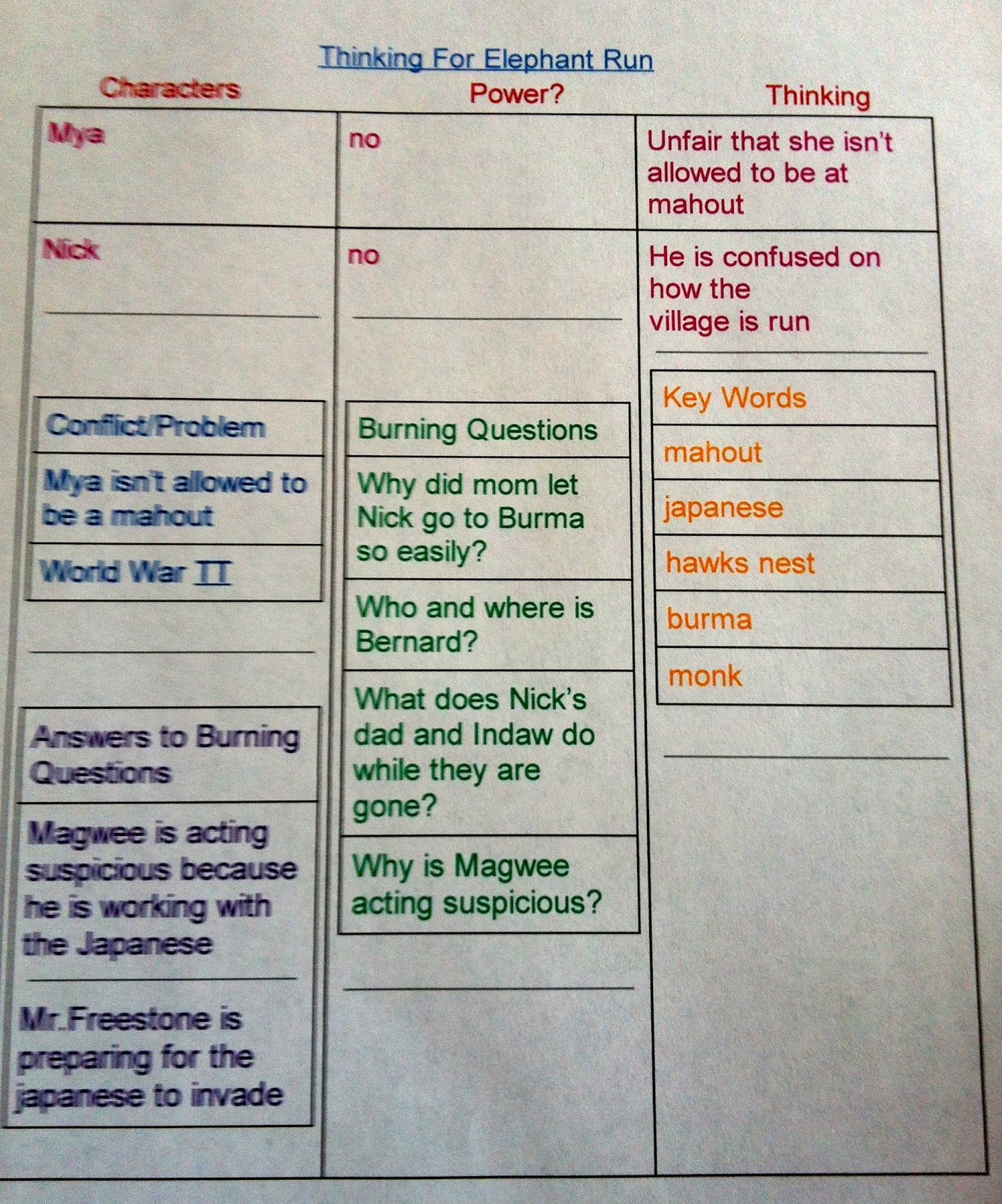
This month, students have been working hard in their historical fiction book clubs to read, think, write, and talk deeply about their historical fiction books.  They have been creating charts and using a variety of note-taking strategies to help them prepare for their book club conversations that they have on Mondays, Wednesdays, and Fridays.  Students choose whether to write their thinking on post-its, in their reader's notebook or book club notebook, or use Google Drive to help them deepen their thinking and prepare for their conversations.  

Below are some examples of the work students have been doing in their notebooks and on Google Drive to prepare for their conversations:

Bulletin Board where students post examples from their notebook 
Example of how one student used Google Drive to create a chart 
Another example of how one student used Google Drive to create a chart
Example of a chart created on Google Drive 
Example of a chart created on Google Drive


Example of a plan one student created in preparation for conversation
   

Have a great week! :)


Friday, May 10, 2013

Historical Fiction Book Club Unit: Part 2


Students have been working hard these past two weeks to internalize and apply the skills/strategies I am teaching in mini-lessons into their book club books and conversations.  Since read aloud is an extremely important part of our day as a class, a lot of my modeling for writing and talking about reading occurs through read aloud.  Students have been watching me make different charts for each read aloud since the first day of school (and we have read A LOT of books) so they are "chart experts" themselves at this point and we are all learning strategies from one anther on ways we can keep track of and extend our thinking. 

At the beginning of our historical fiction unit, I read aloud about eight different picture books to expose students to various historical conflicts and time periods to help build their background knowledge about time periods they may be reading about in book clubs.  As we read and discussed these historical fiction picture books, students created their own charts in their reader's notebooks as they do during each read aloud, but they also had some time to create mini-charts as a small group/partnership to showcase their most important thinking about one of the read alouds.  This past week, in my morning message, I gave students the option of working on a mini-chart for a read aloud with a small group/partner until it was time for morning meeting.  Most students opted to create at least one and loved doing it! These mini-charts gave students an opportunity to collaborate with one another, determine what information/thinking was most important since they had limited space on the paper, and allowed them to express their thinking through sketches as well as words.  

Below are photos of mini-charts that small groups/partners created for some of our historical fiction picture book read alouds:  

Bulletin Board with Mini-Charts 

Example of Mini-Chart for The Other Side 

Example of Mini-Chart for Faithful Elephants 

Example of Mini-Chart for The Butterfly 

Example of Mini-Charts for Henry's Freedom Box

Example of Mini-Chart for Freedom on the Menu

Below are photos of some charts students created in their reader's notebooks during our read alouds last week: 


Enjoy the weekend! :)