Showing posts with label Book clubs. Show all posts

Monday, May 20, 2013

Historical Fiction Book Club Unit: Part 3


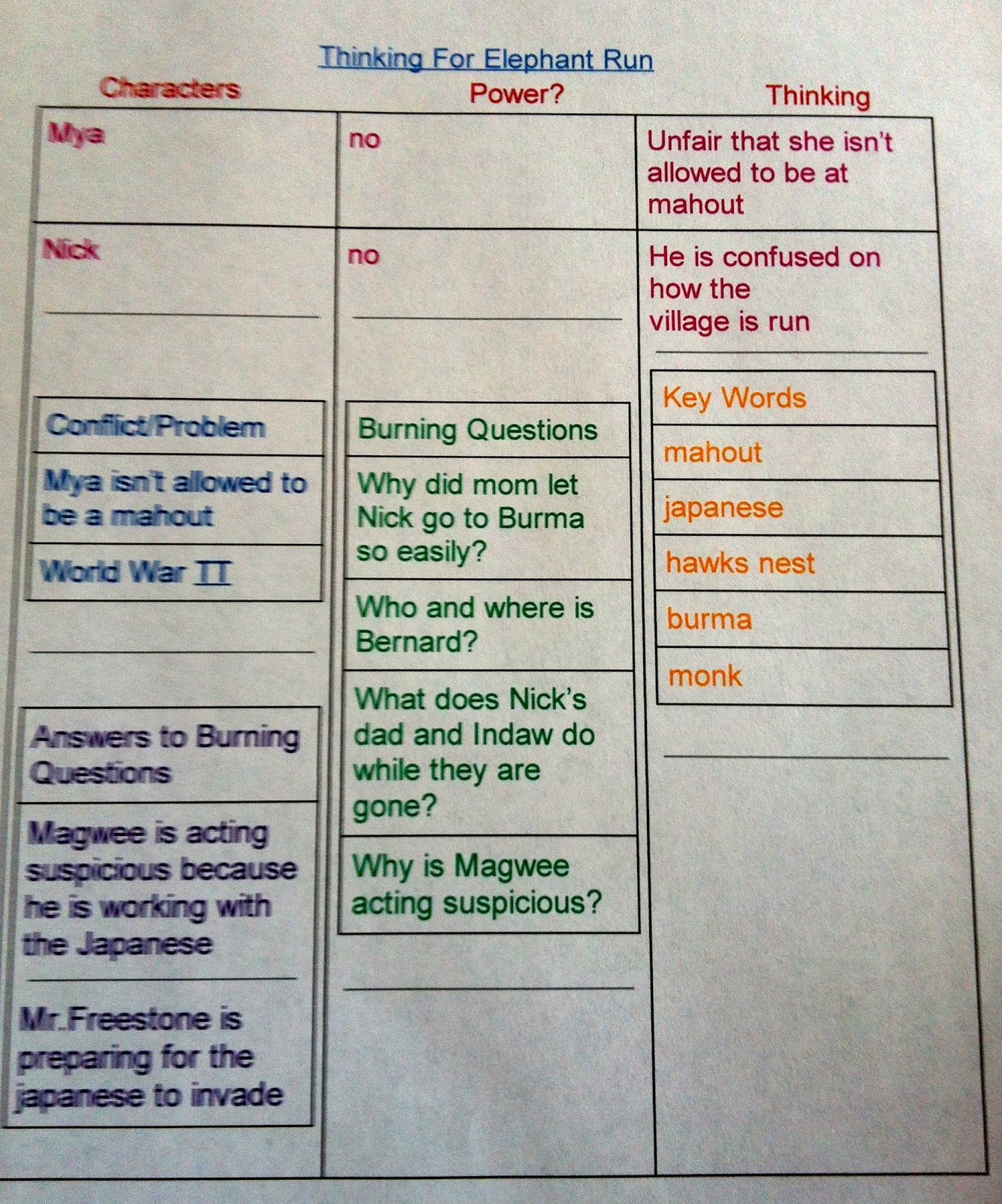
This month, students have been working hard in their historical fiction book clubs to read, think, write, and talk deeply about their historical fiction books.  They have been creating charts and using a variety of note-taking strategies to help them prepare for their book club conversations that they have on Mondays, Wednesdays, and Fridays.  Students choose whether to write their thinking on post-its, in their reader's notebook or book club notebook, or use Google Drive to help them deepen their thinking and prepare for their conversations.  

Below are some examples of the work students have been doing in their notebooks and on Google Drive to prepare for their conversations:

Bulletin Board where students post examples from their notebook 
Example of how one student used Google Drive to create a chart 
Another example of how one student used Google Drive to create a chart
Example of a chart created on Google Drive 
Example of a chart created on Google Drive


Example of a plan one student created in preparation for conversation
   

Have a great week! :)


Friday, May 10, 2013

Historical Fiction Book Club Unit: Part 2


Students have been working hard these past two weeks to internalize and apply the skills/strategies I am teaching in mini-lessons into their book club books and conversations.  Since read aloud is an extremely important part of our day as a class, a lot of my modeling for writing and talking about reading occurs through read aloud.  Students have been watching me make different charts for each read aloud since the first day of school (and we have read A LOT of books) so they are "chart experts" themselves at this point and we are all learning strategies from one anther on ways we can keep track of and extend our thinking. 

At the beginning of our historical fiction unit, I read aloud about eight different picture books to expose students to various historical conflicts and time periods to help build their background knowledge about time periods they may be reading about in book clubs.  As we read and discussed these historical fiction picture books, students created their own charts in their reader's notebooks as they do during each read aloud, but they also had some time to create mini-charts as a small group/partnership to showcase their most important thinking about one of the read alouds.  This past week, in my morning message, I gave students the option of working on a mini-chart for a read aloud with a small group/partner until it was time for morning meeting.  Most students opted to create at least one and loved doing it! These mini-charts gave students an opportunity to collaborate with one another, determine what information/thinking was most important since they had limited space on the paper, and allowed them to express their thinking through sketches as well as words.  

Below are photos of mini-charts that small groups/partners created for some of our historical fiction picture book read alouds:  

Bulletin Board with Mini-Charts 

Example of Mini-Chart for The Other Side 

Example of Mini-Chart for Faithful Elephants 

Example of Mini-Chart for The Butterfly 

Example of Mini-Charts for Henry's Freedom Box

Example of Mini-Chart for Freedom on the Menu

Below are photos of some charts students created in their reader's notebooks during our read alouds last week: 


Enjoy the weekend! :)


Saturday, May 4, 2013

Historical Fiction Book Club Unit: Part 1

Currently, we are in our Historical Fiction Book Club Unit and students are applying the skills/strategies they learned in our Social Issues Book Club Unit to this unit.  To launch the unit, we have been reading and discussing various historical fiction picture books, such as: Henry's Freedom Box by Ellen Levine and Kadir Nelson, Freedom Summer by Deborah Wiles, Freedom on the Menu:The Greensboro Sit-Ins by Carole Boston Weatherford, The Other Side by Jacqueline Woodson, and The Butterfly by Patricia Polacco. While reading these picture books, we have been thinking and talking about the time periods, historical conflicts, and how the characters' actions/choices are impacted by the groups they belong to as well as the time period.  As we read these picture books, we created charts as a class like we normally do during every read aloud (see photos of charts below).  

Students have been applying the skills/strategies they are learning through mini-lessons and read aloud to their historical fiction book club books that their group chose to read.  Each book club chose at least three books that either focus on one time period so they can become an "expert" on that time period or are reading books across different time periods and are reading them in sequence.  Most book clubs this year chose the latter and have planned out how to read their books in order according to the time periods.  Some of the books my book clubs are reading are: Behind the Bedroom Wall by Laura E. Williams, Stones in Water by Donna Jo Napoli , Countdown by Deborah Wiles, Number the Stars by Lois Lowry, Lily's Crossing by Patricia Reilly Giff, Elephant Run by Roland Smith, and many more.  

Below are photos of some of the charts we created as a class so far during this historical fiction unit: 
Historical Fiction Unit Chart with some Teaching Points 

 Read Aloud Chart for Freedom on the Menu
 Read Aloud Chart for Freedom Summer 

Read Aloud Chart for The Other Side 
Chart that shows our thinking across Historical Fiction Read Alouds 

Stay tuned to hear more about our unit and see more photos of student work too! Please share any ideas you have for historical fiction units too - I always love to hear about new titles, charts, and strategies to use during this unit! :)


Thursday, April 25, 2013

Social Issues Book Club Unit Reflection

To read my previous posts on our social issues unit, please click below. 

After each unit of study, I have students reflect on their learning during the unit and think about which strategies/skills they can transfer and use in the next unit.  Before beginning our historical fiction unit this week in reading workshop, I had students reflect on our social issues unit.  I have been modeling and teaching students how to reflect on their learning since the beginning of the year so they have begun to internalize the reflection process which is such an important life skill for them to have as learners.  

To begin, I wrote three reflective questions on chart paper: 
  • Which strategies did you learn in this unit that were helpful? 
  • How did book club conversations help you as a reader? 
  • Which strategies/skills can you transfer and use in our historical fiction unit? 

Then we discussed one question at a time and I modeled how I might answer the question as a reader and then students turned and talked to share their personal responses.  All of our teaching points and strategy examples are on charts right near our meeting area so they were able to refer to those as they turned and talked to share their reflections verbally.  After discussing each question and giving students a chance to see me model answering the question and having a chance to turn and talk with their book club, students went off to write their reflections in their reader's notebook.  Each student has a section in their notebook for reflections.
Below are some examples of students' reflections:


I'd love to hear other ways students reflect at the end of units in reading and writing workshop so please share! We began our historical fiction book club unit this week so I will be posting about that unit so stay tuned. :)


Saturday, April 13, 2013

Social Issues Book Club Unit: Part Two

A few weeks ago, I wrote about the launching of our social issues unit and shared some of our initial charts at the beginning of the unit. To read the Social Issues Book Club Unit : Part One, click here.  

We are currently culminating our social issues unit and book clubs had their last book club conversation on Friday.  After our April vacation, students will be reflecting on the unit by thinking about what they learned as readers throughout the unit and how the book club conversations impacted their thinking as a reader.  Stay tuned for a post about their end of unit reflection next week.  

Below are some of the charts we created as a class throughout the unit as well as a photo of the book club wall students created to share their thinking with all of their classmates.  This was a great way for book clubs to share strategies and charts they were using and creating to deepen their thinking as readers.  It was also a great way for book clubs to teach and learn from each other.  


Book Club Wall 


Stay tuned to hear about our reflections for this unit before we begin our Historical Fiction Book Club unit! :)

Saturday, March 23, 2013

Using Google Drive in Book Clubs: Part Two


My students have been using Google Drive in their book clubs in many ways. They have been using it to:  
  • plan out their reading on a calendar to keep track of which chapter to read for each conversation date (book clubs meet every Monday, Wednesday, and Friday).  By creating the calendar on Google Drive, book clubs can access it from anywhere to see what they need to read for the next conversation, without having to worry about losing the paper calendar or forgetting it at school.  
  • create a book club contract to agree on their responsibilities as a book club, what to bring to each conversation, and what the consequences will be if they are not prepared.  By creating the contract on Google Drive, students can access it from anywhere to be reminded of consequences if they aren't prepared and also have the reminders of what to bring with them to each conversation so they are prepared.  
  • prepare for their next conversation by jotting down their thinking, ideas they want to bring to the conversation, and text evidence they have collected to support their ideas.  Some students are still choosing to use their book club notebook to jot down their ideas and create charts to prepare for their conversations, while others are using a combination of both.  
  • record notes from each conversation by noting what idea they focused their conversation on, what evidence they talked about, and what they would like to continue talking about for their next conversation.  Book clubs that are choosing to use Google Drive to record parts of their conversations, are bringing a laptop to each conversation and taking turns typing the information.  Since I am only one person and can't be in five places at once, this is great for me because I can see what each club talked about even if I didn't get a chance to physically be with that club that day.  It is also great for book clubs because they can continue to refer to their past conversations so they are piggybacking onto their ideas and can see how their thinking is evolving.  
To see examples of how they are using Google Drive in these ways, please see the photos below.  I apologize in advance for the blurriness, but I took the photos from the computer so it doesn't always come out clear that way.  I will continue to share ways they are using Google Drive in their book club conversations so stay tuned! 


Book Club Calendar to keep track of which chapters to read for the next conversation

Book Club Contact book clubs completed to agree on responsibilities 
Example of how one book club is keeping track of the focus of each conversation

Another example of how a book club is keeping track of the focus of each conversation

Example of how one student is preparing for conversation 

Another example of how one student is preparing for the next conversation 
I would love to hear about other ways you are using or have used Google Drive for book clubs in your classrooms, so please share!

Thursday, March 21, 2013

Social Issues Book Club Unit

Currently, we are in our social issues unit in reading workshop (one of my favorite units!) and students are in book clubs.  Last week, to launch the unit, we discussed the purpose of the social issues unit and students brainstormed why they think we have a social issues unit.  As students shared their ideas and opinions about the purpose, I jotted them down on the chart below.  I always launch units by having this type of conversation with the students because I believe it is so important for students to know and understand the WHY behind our units and lessons.  

This is our first book club unit of the year so we also brainstormed and discussed the purpose of book clubs.  Students have been participating in book clubs since 3rd grade so they come to 5th grade with book club experience.  Below is a chart we created as a class to list students' ideas about preparing for and having a successful book club conversation.  


So far in the unit, we have been learning how to use specific lenses to deepen our thinking about the social issues our characters are dealing with in our books. For example, reading with the lens of fairness - what is fair or unfair in this text? Or reading with the lens of acceptance - who is accepted or rejected in this text and why? Or reading with the lens of power - who has power and who doesn't? Whose voice is being heard and whose isn't?  Below is a chart listing our mini-lesson teaching points so far for this unit.  Students have been applying these teaching points in the social issue books they have chosen to read with their book clubs and we are also applying them as a class in our read alouds.  

Stay tuned to hear more about our thinking and learning in our social issues unit! :)

Tuesday, March 19, 2013

Using Google Drive for Book Clubs

Since we have been embracing Google Drive this year in our classroom and trying to use it in as many ways as possible, I decided to try using it for book clubs too.

Last week, my students were grouped into book clubs and they selected at least three social issue books, during our book pass, that they were interested in reading during this unit.  Usually, the next step is for each book club to complete a "book club contract" and fill out a calendar of how many pages/chapters they will read for each conversation day (Monday, Wednesday, and Friday).  These documents are usually on paper and then we have to make photocopies so each member as all the information and that they put them in a safe place so they don't lose them (which some still do...).

Yesterday, I ventured into using Google Drive for these documents instead and it was fabulous!  I uploaded the documents to Google Drive and shared them with the whole class.  During reading workshop, each book club had one laptop and went onto Google Drive to complete the contract and set up their calendars for their first two books. They shared these documents with one another and with me.  Now students can access their calendars and any other planning sheets for their book club conversations at home without having to worry about forgetting it at school or misplacing them - why didn't I think of this sooner for book clubs!

Most book clubs decided yesterday that they will have one laptop available during their conversations to use Google Drive - stay tuned to hear how they are going to use it!

I would love to hear how others are using Google Drive with students during book clubs so please share!  Stay tuned to hear more about how we are using Google Drive during our book club units.


Tuesday, May 29, 2012

Strengthening the Level of Book Club Conversations

In 5th grade, our students participate in book clubs in at least two of our reading units: Social Issues and Historical Fiction.  This year, I tried something a little different to heighten the level of my students' book club conversations and will definitely do it again next year. 

This year, in addition to using consistent whole class conversations and partner conversations throughout the school year to strengthen their ability to talk about books, I also formed book clubs for some of our read alouds.  For example, in between our Social Issues and Historical Fiction units, I had the book club groups practice how to prepare and have successful conversations around our read aloud, The Running Dream by Wendelin Van Draanen.  

During this week, Melanie Meehan and I acted as a mini-book club to model how to prepare for our conversations and use our writing to have successful conversations during our reading workshop minilessons.  We modeled how to plan for our conversations about The Running Dream, using the chart paper as our reader's notebooks during Tuesday and Thursday's minilessons.  After our modeling, students had time to plan for their own book club conversation for the following day during the active engagment part of these minilessons.  Then on Wednesday and Friday of that week, Melanie Meehan and I modeled how to use our writing that we did on the previous day to have a successful conversation about The Running Dream by having a fishbowl conversation during the minilesson.  After observing our conversation and sharing what they noticed, students went off to have their own book club conversations around the read aloud by using their writing to help them.

Student Example of Preparing for Conversation
(This student even referenced Growth Mindset!!)
By using a read aloud for book club conversations this week, we were able to clearly model and coach into how to strengthen our conversation skills. This indepth work of strengthening students' ability to write and talk deeply about books made a big impact on the level of their conversations and writing about their reading. 

The following week, we launched our Historical Fiction book club unit, but instead of having students begin choosing their historical fiction book club books right away, I had the book clubs focus their conversations  on our picture book read alouds for one week.  On Monday, Wednesday, and Friday of that week, they focused their conversation on different historical fiction picture books that we read aloud such as: Henry's Freedom Box, Freedom Summerand Freedom on the Menu.  During this week, I also had the book clubs create "mini-charts for the historical fiction picture book read aloud that they discussed just like I create charts for each of our read alouds.  I was so impressed by their thoughtful work and the level of their thinking on these mini-charts and in their book club conversations about these read alouds.


After this successful week of talking about the picture book read alouds, each book club chose their own set of 3-4 historical fiction books they will read and discuss during this book club unit.  Their conversations and writing are definitely at a higher level than they were before and as one student said it last week when their work was complimented by another teacher, "That's how we roll in here." :)

Enjoy! :)