Monday, December 3, 2012

It's Monday! What are You Reading?

Thank you Jen and Kellee for hosting this weekly!  To see what others are reading and recommending, or to participate, be sure to check out their blog Teach Mentor Texts :)


I have been reading and loving Common Core English Language Arts in a PLC at Work Grades 3-5 by Douglas Fisher and Nancy Frey and I highly recommend it!  I will definitely be posting more about this professional text soon so stay tuned! 

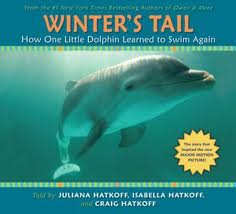
Since I have been reading more professionally this week, I thought I would share some of our nonfiction read alouds that we read and enjoyed in class last week.  I will be posting photos of our read aloud charts from these texts in the Bulletin Boards and Charts section of this blog (I continue to add to this section with photos from our 5th grade classroom).  


Happy Reading! :)


It's Monday! What Are You Reading?


It's Monday! What Are You Reading?
So many of my book recommendations have been from the weekly shares on teachmentortexts.com. Thank you to Jen and Kellee for hosting and thank you to all who contribute their reading lists! To see what others are reading, head on over to the website and link into all of the reading recommendations.


I have to admit that I fell prey to an addictive adult fiction book, so I've neglected my TBR stack of children's literature. However, I did get through The Great Unexpected by Sharon Creech, a book that many of my blogging friends have recommended. I'll join the recommenders and I will add that this is a book that really requires close reading, since all of the parts and people are connected.


I also read The Curious Garden by Peter Brown and for anyone who has visited the High Line Garden on the west side of New York City, you should not miss this book! It's also a beautiful story for any teachers who are interested in promoting gardening or teaching about environmental issues. Enjoy!


Sunday, December 2, 2012

The Zone of Proximal Development for our Student Writers


When I visit writing classrooms, I frequently notice how much adults do for students--especially for students with IEP's. Adults translate so many lessons for students--where to add details, how to add more specific words, where to include an anecdote. They do a great job at making that particular piece better, but what is the message and the teaching that their students are receiving?

Last week, I presented a workshop on writing instruction to our district's Special Education paraprofessionals. Since one of my favorite messages from Lucy Calkins is "teach the writer and not the writing", I decided that part of my presentation would be about Lev Vygotsky's zone of proximal development, "the distance between the actual developmental level as determined by independent problem solving and the level of potential development as determined through problem solving under adult guidance, or in collaboration with more capable peers."

My workshop centered on how we could provide the most effective support for our most struggling learners and one of the take-aways that I wanted to give was that we should teach students within the middle ring.

So many times, I hear adults in the room telling students exactly what to do since most of our students with IEP's are several rings away from the dark purple circle that represents independence in the above model.

 In order to illustrate this concept, I asked the adults to unscramble three sets of words:

1. A set of commonly owned household pets. This was easy for them and they quickly recognized dog, cat, bird, and bunny.

2. A set of the last names of the district secretaries. I had to encourage them to collaborate but once they realized that asking each other was allowable, they were able to solve these five word jumbles.

3. A set of the last names of famous Russian and Italian painters without any access to technology. For this last one, I purposely rushed them, pronouncing the names and pressuring them to write the answers. Then, I spelled the names, but I spelled them quickly.

While I know that this activity was not a perfect simulation for how our students feel, I think that it did illustrate the competence and pride that we have when we complete a task and the frustration that we feel when we face a task that is completely beyond our ability. Some of the comments that I heard were:

"I liked the second task best--it was fun when we could figure it out."
"She really annoyed me when she spelled those names so quickly."
"How were we supposed to know how to spell those names?"
And, my favorite...
"No wonder the kids act out!"


From this part of the presentation, I'm hoping that everyone walked away with an:
  • increased appreciation for the frustration people feel when they need to be told how to complete every step.
  • increased commitment to fostering independence and courage for all students during writing workshop (and maybe for the other parts of the day, as well!)
  • increased curiosity of how to break down the task of writing so that what we ask our students to is what they are able to do with guidance as opposed to constant supervision.
So far the feedback has been positive, but we'll see if the interactions change...

Enjoy your Sunday evenings,

Melanie Meehan

Thursday, November 29, 2012

Summary Writing in Nonfiction Unit Part 1

This week, we started working on writing summaries for the nonfiction articles we are reading.  I think it is always important for students to know and understand the purpose for WHY they are doing something so our first minilesson started with turning and talking about what they think of when they hear the word summary and why they think we write summaries.  I recorded their responses on the anchor chart below.  I also think it is important for teachers to write and model their own writing for students so I wrote a few summaries so I was ready to model the process for the students and share my own writing work with them. 

To demonstrate the process of summarizing, I first modeled how to annotate an article to identify a main idea and important details to include in a summary.  While starring/underling the important parts of the article, I thought aloud about why they were important.  I told students to be on the lookout for the main idea and important details as I read aloud my summary for the article.  Students turned and talked to identify the main idea and important details in my summary and we labeled those parts on the Smartboard.

On our class chart, we also marked the parts with different colored post-its (yes, I love to color code  like my students - I wonder where they get it from?) Then students had a turn to practice writing their own summaries for another article and used my summary as a mentor. They mimicked the process I went through by annotating their text to identify main ideas and star/underline important details.  They used their annotated text to write their own summary.


Students are enjoying summary writing and comparing their summaries with their writing partners to see if they have similar main ideas and important details.  They are also learning from one another and now using their classmates' summaries as mentors instead of only mine.  We started a bulletin board yesterday to display our chart and summary examples that students are proud of and that can be used as mentors for classmates.
Today we started writing summaries with two main ideas so stay tuned to hear more about that! :)

Happy writing and summarizing! :)


Wednesday, November 28, 2012

Writing Workshop Essentials

When I started my new position in August as our district's Writing and Social Studies Coordinator, I began to look for a one page document that listed the important components of a writing workshop. Since I couldn't find exactly what I was looking for, I consolidated several into the following list. I'm still not sure that this is complete and I'm open to feedback, but this is the combination of some of the lists in Lucy Calkins' books, conversations with colleagues, and observations of powerful classrooms. I envision using this as a checklist for setting standards, expectations, and goals for workshop instruction.


Writing Workshop Essentials

o   Environment
o   Writing supplies area includes:
§  Pencils, markers, erasers
§  Post-its, index cards, envelopes
§  Spell-check machines, dictionaries, thesauruses
§  Mentor texts
§  Staplers, paper clips, tape, push-pins
§  Evidence of demonstration texts and teacher writing

o   Meeting area includes:
§  Chart paper
§  Author’s chair

o   Mini-lessons:
o   Link to the unit of study
o   Contain a clear and concise teaching point
o   Include active engagement
o   Link to independent work
o   Stay within the 10-minute guideline

o   Workshop routines are evident through:
o   Writer’s notebooks for grades 3 and up with appropriate quality/quantity
o   Writing folders for grades K-2 with appropriate quality/quantity
o   Writing folders for work in progress for Grades 3-up
o   Charts on the wall that serve as instructional tools and are evidence of strategy instruction
o   Solid 35 minutes of writing block to allow for conferring and small group work
o   Writing partnerships
o   Students’ understanding and use of mentor texts
o   Mid-workshop teaching point
o   Evidence of publication and movement through the writing process
o   Daily end of workshop shares:
§  Occur in the last 5 minutes
§  Provide evidence of the mini-lesson teaching point


o   Conferring includes:
o   A system of note-taking
o   Management that supports a no-interruption policy
o   Evidence of Compliment-Research-Teach-Challenge strategy
o   A balance of individual, partner and small group conferences


This is what I have so far and I am really interested in feedback, as well as ideas on how to use it.

Happy writing,
Melanie

Monday, November 26, 2012

It's Monday! What are You Reading? Narrative/Hybrid Nonfiction

Thank you Jen and Kellee for hosting this weekly!  To see what others are reading and recommending, or to participate, be sure to check out their blog Teach Mentor Texts :)


We are currently in our Nonfiction Unit in reading workshop so a lot of my reading has been dedicated to nonfiction texts of all types, including narrative nonfiction.  I have been planning which narrative nonfiction texts to read aloud to my class this week (I have many favorites!) and I came across A Nations Hope: The Story of Boxing Legend Joe Louis by Matt De La Pena and Kadir Nelson. 
It is a beautifully written picture book biography that I immediately added to my pile of texts I am reading aloud this week.  This book tells the story of  the 1938 World Heavyweight Championship fight between American boxer Joe Louis and German Max Schmeling.  It captures a moment when Americans set aside their racial differences to unite against a common enemy at the beginning of World War II. This historic fight symbolized more than just the world heavyweight title, but also the country's war with Germany.  I know that this book will become a mentor text in our classroom for writing workshop as well as reading workshop because it is such a powerfully written text.  I can see using this as a mentor text for word choice, voice, and how to include backstory in writing pieces. I know I will also refer back to this text during our historical fiction unit in reading workshop and in our conversations about strong characters.  This text is not only beautifully written in verse, but also has gorgeous illustrations by Kadir Nelson.  His illustrations always bring the story to life for the reader.  


I also read Gentle Giant Octopus by Karen Wallace. This text tell the story of a gentle giant octopus while also weaving in information about octopuses through the story as well as in italicized words on the bottom of the pages.  It has an introduction about octopuses and an index in the back. This is not only a good example of narrative nonfiction, but also of hybrid nonfiction because it gives the reader information in both a narrative and expository structure.  This can also be a mentor text for students as they write their own informational texts and want to try out writing in a narrative way and using a "PBS" voice to teach their readers about their topic.  

Happy Reading! :)

It's Monday! What Are You Reading?


It's Monday! What Are You Reading?

So many of my book recommendations have been from the weekly shares on teachmentortexts.com. Thank you to Jen and Kellee for hosting and thank you to all who contribute their reading lists! To see what others are reading, head on over to the website and link into all of the reading recommendations.


One of the books I read was This is Not My Hat by Jon Classen. What a great book for teaching inferences to young students since so much of the story is relayed through the pictures! It's also a terrific mentor text for younger students to show them how important details in pictures can be.

I also read Ralph Tells a Story by Abby Hanlon, which I heard about from a post by Stacey Shubitz. I can't recommend this book highly enough as a mentor text for primary writing workshops. Ralph can't think of a story within a writing workshop classroom and the comments and resolution are funny and spot on.

Unspoken: A Story From the Underground Railroad by Henry Cole is a beautiful picture book. Enough bloggers have written about it that I ordered it and I'm glad I did. There are no written words, a parallel to the plot, but the pictures tell a powerful and poignant story. Additionally, I loved the author's note at the end and his invitation to people to create their own stories from the pictures.

Check, Please! (Frankly, Frannie) by AJ Stern is a book that I could see appealing to younger elementary students. Frannie has a great voice, a unique way of making up words, and ultimately, a strong understanding of the power of her words and writing. The restaurant review that Frannie finally writes is a great example of persuasive writing to share and talk about with students.


Professionally, I have been reading Franki Sibberson's The Joy of Planning. Melanie Swider recommended Franki's book on an earlier IMWAYR post. I completely agree with all the accolades this book has received!


Happy reading!

Sunday, November 25, 2012

Partner Conversations in Nonfiction Unit: Part 3

This is the 3rd post in a series about our Nonfiction Unit.  To read my previous posts, click below: 
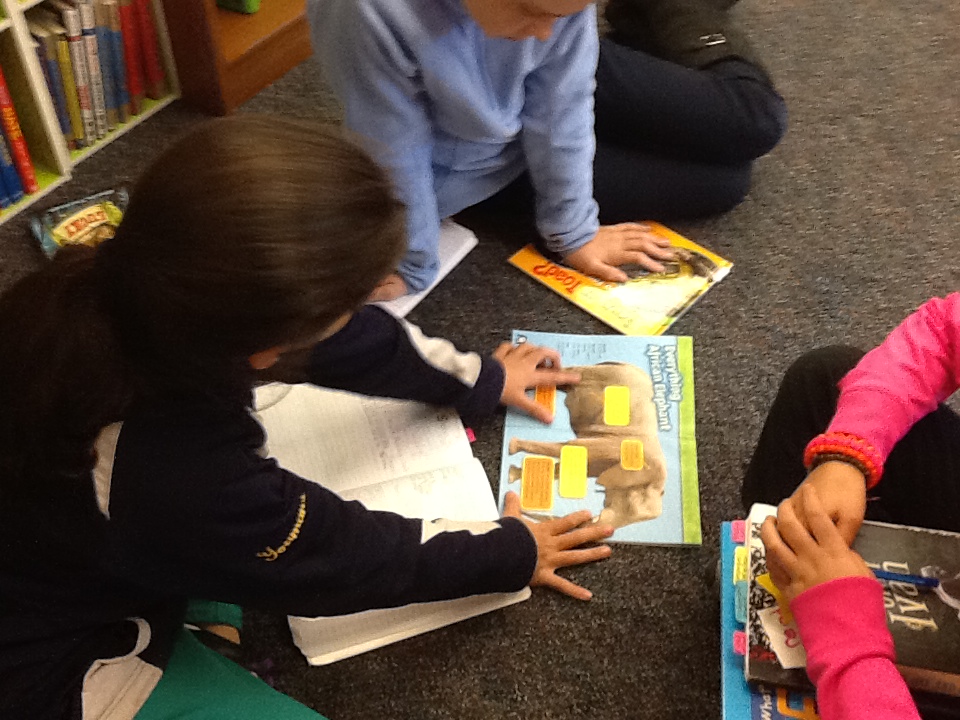
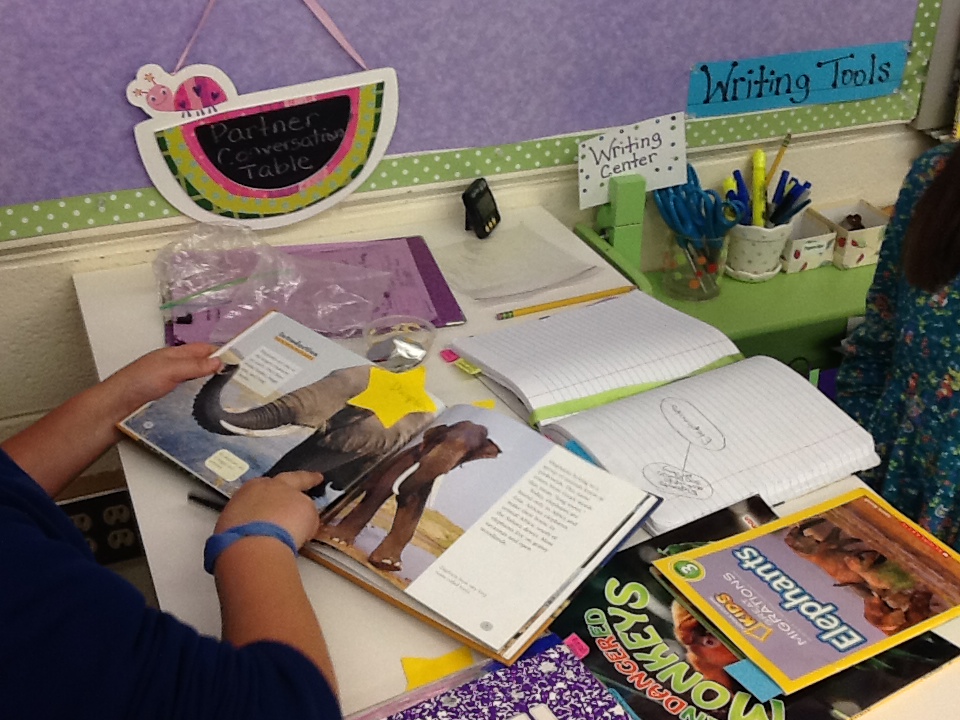
During our nonfiction unit, students still read their fiction chapter books so I have students meet with their partners in the middle of reading workshop, instead of at the end, to clearly split up the nonfiction and fiction reading. For example, after the mini-lesson, students go off to read their nonfiction texts.  After about 15-20 minutes, I pause them for a mid-workshop teaching point that leads them into their partner conversations.  In our classroom, we have Partner 1 and Partner 2 identified in partnerships so each day I alternate between having one of the partners do the teaching, while the other actively listens and asks questions to deepen their understanding and thinking.  After talking for about 5 minutes, I have students end their conversations and switch to their fiction reading.  During this unit, some partnerships have chosen to read nonfiction texts on the same topic or the same text, while some have chosen to read texts on different topics, but read the same fiction chapter book.  

During their partner conversations, they use: 
  • their texts to open up and point to specific information
  • their reader's notebooks to share information and thinking they jotted in their notes 
  • the post-its they used to mark important places in the text. 
I have modeled how to use the text and notes during a conversation to actively involve and teach their partner as well as how to be an active listener and ask questions to deepen your partner's thinking and learning.  We also have numerous fishbowl conversations, where partnerships model a conversation in the middle of a circle and we listen, watch, and notice what they are doing to have a powerful conversation.  This helps students see what a successful conversation looks like and the visual helps them be able to try out those conversational moves and strategies in their own conversations.  

Below are some photos showing the partner conversations in action: 


Happy Reading, Writing, and Talking about Nonfiction! :)


Saturday, November 24, 2012

Independence and Repertoire: Part 2

In a recent post, I wrote about developing independence for student writers. One of Teacher's College staff developers, Emily Smith, had used independence and repertoire in a sentence together and I have loved thinking about the two terms together.

For me, a writer's repertoire is all of the skills he/she has and the ability to use those skills across genres in order to add depth to various types of writing pieces. One of the problems that I see in classrooms is that students don't  always internalize lessons and make the skills their own; I love to see explicit teaching that what we teach during one unit is completely applicable in other units, as well. Here are some of the repertoire skills I have been thinking about:

1. Backpacks
Melanie Swider wrote a post earlier this year about writing backpacks, emphasizing the fact that students need to have writing territories. If a child is a soccer player, chances are he/she has narrative, persuasive, and informational ways to write about soccer. If he/she has a sibling, there are probably several writing opportunities across the three genres. So many times, we hear that students have nothing to write about. Developing notebook pages of writing topics offers students an increased repertoire of what to write about, a part of the writing process that can really muddle students. I created this chart as an example of how we can teach students the repertoire that they don't always know that they have.

2. Maintaining focus and purpose
When students understand that thesis is to essay as heart/climax is to narrative, their sense of repertoire develops. Just as their essay should weave in ideas and evidence that support a central idea or claim, their narratives should drive the central plot. The more that they understand the purpose, the more they develop this key skill of their repertoires.

3. Elaboration
Again, we should be developing elaboration skills across genres as closely related entities. If a student can use quotes and conversation in narrative, then he/she should have that skill available for argumentative and informational writing. If a student has learned how to capture and ground readers with strong narrative beginnings, that skill should show up in other genres. The list goes on, but the idea stays the same.

4. Conventions and grammar
The more that we can teach students that conventions and grammar exist in ALL types of writing, regardless of the content area, the more that they develop these skills and the repertoire to use them. If we teach them that spelling, conventions, and grammar offer power to writers, then students are more likely to develop mastery of these skills and strategies, developing an increasingly sophisticated repertoire of how to express themselves.

The more that students can take a step back and understand that the skills they learn in one unit apply to all of the units, the more that they build repertoires for themselves. One other chart that I have designed was with the Common Core in front of me, thinking about the sub-skills for each type of writing. It's easy to see the repetition of the skills as you look across the rows so it can become clearer to students how to apply skills that they have learned across genres of writing.

More than anything, thinking about repertoire reminds me that students learn more powerfully when they understand the "whys" behind their learning.

Happy learning, teaching and writing!

Tuesday, November 20, 2012

Note-Taking Examples from Students in Nonfiction Unit: Part 2

This is the 2nd post in a series of posts about our Nonfiction Unit.  To read my first post, please click here.  

In my previous post, I shared a photo of our class bulletin board where students post note-taking examples that their classmates can use as mentors.  Below are a few close-ups of some note-taking examples that students have posted so far. These are the forms of note-taking that students chose to use while reading their text during independent reading or while actively listening during read aloud.  I taught and modeled various note-taking strategies and we have practiced how to choose a form of note-taking that best organizes the information.  We learned that note-taking is a tool and that we need to choose the best tool to match the text we are reading, just like we choose a hammer to put a nail into a wall or a staple remover to remove a staple in papers.  

As students use different forms of note-taking, they are posting them on our bulletin board and sharing their reasoning behind using the form they chose.  They are learning from one another and using each other as mentors - such powerful learning! You will notice that students use colored pencils while they take notes - this not only gives them the ability to color-code, but also inspires them to take notes and write in their notebooks!  They use colored pencils throughout their reader's notebook, not just for note-taking in our nonfiction unit, but throughout all units and all sections of their reader's notebook. 
This student chose to use a flow-chart to show the Problems/Solutions in their text

This student chose to create organized boxes to jot down information about her topic

This student chose to use a T-Chart to clearly show the differences between Dolphins and Sharks as we read Shark or Dolphin? by Melissa Stewart 
This student chose to draw the life cycle of a penguin as he read about the sequence in his text


Happy Note-Taking! :)


Monday, November 19, 2012

It's Monday! What Are You Reading?


It's Monday! What Are You Reading?
So many of my book recommendations have been from the weekly shares on teachmentortexts.com. Thank you to Jen and Kellee for hosting and thank you to all who contribute their reading lists! To see what others are reading, head on over to the website and link into all of the reading recommendations.


As is frequently the case, I went to the bookstore to find a couple of specific titles and they did not haven them...However, since I had an hour to use up before having to pick up a daughter, I found many other books to read and enjoy.

Penguin and Pinecone by Salina Yoon is an adorable book about a penguin befriending a pinecone. A somewhat unlikely relationship, I know, but one that could inspire classroom conversations about good friends and even some habitat and agricultural lessons.

My No, No, No Day by Rebecca Patterson reminded me a lot of Harriet,  You'll Drive Me Wild by Mem Fox or Alexander and the Terrible, Horrible, No-Good, Very Bad Day by Judith Viorst. It's another good title for showing students that if they must write a bed-to-bed story, they really need to establish a unifying strand. In this case, the main character's day got worse and worse because of situations that most young children can understand!

Charley's First Night by Amy Hest is a cute book about a puppy's first night in a new house. Since MANY of the on-demand personal narratives I read had to do with getting a new puppy, this might be one to pull out during next year's Personal Narrative unit.

The last one I'm sharing tonight (although I did read several more!) is I Have a Dream, a picture book of Martin Luther King's speech with amazing paintings by Kadir Nelson. I would use this book to honor Martin Luther King, but I would also use it to teach principles of persuasive writing. What an amazing speech to read and re-read, as well as listen to since this book comes with a CD, as well!

Have a wonderful Thanksgiving, everyone, and Happy Reading!

Sunday, November 18, 2012

Independence and Repertoire: Part 1

When I was talking to one of our Teacher's College staff developer, Emily Smith, she talked about building independence and repertoire for students as they work through the writing process. Since then, I have been thinking about what that means for all genres at all levels. What are the tools that students have that help them build independence, confidence and skill? What are the tools that we can offer students that help them to understand the skills that they acquire and the pathways that exist for generalization? Although I at first envisioned this post as a single one, I have decided to break it into two parts; the first part is about tools for independence and the second part will be about building repertoire for students.

1. Charts
Kristi Mraz and Marjorie Martinelli who are the authors of Smarter Charts wrote a great guest blog post at twowritingteachers.wordpress.com. If you missed this post, I highly recommend reading it because they write all about how to create, use, and retire charts in classrooms. For me, I think that charts increase accountability for students. If students participate in the creation of the chart, have daily access to it while doing their work, and understand that the charts have answers to frequently asked questions, then students learn that these charts build independence. The charts are a step along the path of gradual release. Another powerful post I recently read is on the blog, To Make a Prairie by Vicki Vinton. Thinking about some of what Vicki wrote makes me really want to see students involved in the development of charts and also moving in the direction of not needing the charts. While I love to see charts evolve, remind and inspire children, I also love to see them retire as students become independent.

2. Goal-setting
I am looking forward to the release of the new units of study from Lucy Calkins and Heinemann Press due out in March 2013 because I know that one of the emphases will be on students setting goals for themselves. When Emily visited our fifth-graders in October, she taught students about checklists that they can use during their writing process; they could use these checklists not only to evaluate their work in progress, but also to set goals for themselves. Many of our students have continued to use the checklists and monitor their goals. I think that it is SO important for students to learn to set goals for themselves because by doing so, they take ownership of their learning and they build independence. 

3. Mentor Texts
Mentor texts are my favorite teaching tool and I think that the more we can get students to recognize craft moves, the more that we can get students to use those craft moves in their own writing. As a writer, I can't tell you how many times I have heard that the best way to improve my writing is to read. And read. And read. When we model to students how to study craft moves and writing impact, mentor texts become important tools for students to build Independence.

4. Partners
That old saying about teaching a man to fish comes to my mind whenever I think of writing partners. It's a lot of work to teach students how to be effective partners. They have to learn their roles, how to listen, how to recognize and evaluate good writing, and how to give meaningful feedback. However, how useful partnerships can be for busy teachers! If the goal is to lift the level of student work and we can get students to help us do that, what amazing independence we are building in our classrooms!

5. Writer's Notebooks
I'm saving the most important tool for building independence for last...the more that we can teach students that their notebook is a source for topics, revision, strategies, quotes, characters, conversations, and many other lessons we teach, the more independently students will cycle through the writing process in all genres.


As an elementary coach of several grades, I love the all encompassing aspect of independence and repertoire. Students build both during and throughout grades and the more that we explicitly teach these skills, the better for students as learners.  "Your job, students, is to take these skills that I teach you and apply them to all types of your writing on your own, without me." What an important message to send to all students of all grades and levels. The second part of this post will be about building repertoire for students and I'd love to hear about other ways that you are teaching independence and repertoire to your students. Please feel free to share in the comments.