Saturday, March 9, 2013

#Slice 2013: 9 of 31- Collecting Characters

This month, I am participating in the daily Slice of Life, hosted by two of my favorite bloggers, Ruth Ayres and Stacey Shubitz of Twowritingteachers.wordpress.com. Throughout the month, many bloggers have committed to writing every day. Comments are welcome, so feel free to link up to their websites and read some of the daily entries!


Collecting Characters

One of the morsels of advice that I hear from favorite authors is to collect characters and stories so in this post, I am doing just that. I have a page in my notebook, but a few have come my way just recently...

Mr. Schirmer- He just recently passed away, after living an amazing life. He was born in Germany and moved to CT after the war. He invented and patented several things, finding great success as an engineer. His daughter did not know that he had bought plots until after he had died. He had a choice of purchasing two plots right together or seven plots right together. He bought seven because "he didn't want anyone close to him."

Jenna- a beautiful high school freshman who is growing too fast, finding herself as the 11th person on a ten person team, and not sharing her friends' increasing interests in boys. She has finally been invited to play on the competitive soccer team as a team member and not just as a training player. Could a picture book work for such an old group? Probably not and it might not be edgy enough for the age group... hmmmm.

Gabby- a third-grade girl who doesn't talk. Smart, well-liked, seemingly happy, she stopped talking in first-grade and is now in a class with a teacher she loves

Ms. Quinn- A former nun who helps in our schools with some of the test prep who told one of the funniest stories/jokes I have heard in a while as we sorted through packets and stickers. Seventh-grade girls were testing out their lipstick applications by pressing their lips against the bathroom mirrors until the head of school marched them into the bathroom and had them watch how difficult it was for the custodian to clean the mirrors. He dunked the sponge into one of the toilets and began wiping at the mirror.

Eunice-A friend of my 15 year-old daughter who moved into our town this year, just in time to begin high school. She has a younger brother with significant disabilities and a mother who doesn't speak English. She just told Julia that she will probably be moving to Kansas this summer because her father has a job offer there. 

Maddy- A friend of my 16 year-old who is smart, beautiful, and resistant to rules. She met my daughter at Starbucks on the day after my daughter got her driving license and was furious that Larkin would not drive her home after their cup of java. (It's illegal for kids to drive other kids for a year after they get their license!)

Over the course of this month, I will write about these stories and maybe someday, I will weave them into a bigger book. For the time being, I'm liking the collecting.


Friday, March 8, 2013

#Slice 2013: 8 of 31- What's Left?


 For the month of March, I have joined many bloggers in the Slice Challenge of 2013, hosted by Stacey Shubitz and Ruth Ayres of twowritingteachers.wordpress.com. Join us or check out some of the writing that people are doing by following the links in the comments. In the spirit of Poetry Friday, I have tried my hand at a poem that has been drafting itself in my mind this week.


What's Left?


They come early. Can we look around?

We pull out lamps and linen, frames and books, china and candlesticks.
DVDs, CDs, platters, glasses, chairs, a sofa.
We put them out for people


to see
what's left
and
who wants it

A clock, a radio, a sander, a jigsaw.
Do they work? How much for all of them?
Nails, washers, bolts, screws. All sizes. Have them.
Yards of electrical tape and wire.
You can use this? Have it.

What's left?
Sheets, pillows, towels, napkins with holiday motifs from Easter and Christmas and St. Patrick's Day and Thanksgiving folded in piles.
Halloween costumes from rowdy times--who was Little Red Riding Hood and who was the wolf?--

On tables for people

to see

what's left
and
who wants them

Tools and nails and piping and yards of fabric and balls of yarn.
An unfinished hat for an unborn baby.
Worth something somewhere to someone.

How much? Ten dollars. I'll give you five. Nine dollars. Seven. Fine.

A small vase. Where's it from? Don't know. A gift from a friend, maybe? From a visiting relative? From someone else's collection? Don't know.

Never asked.

What's left?

What is left?


Thursday, March 7, 2013

#Slice 2013: 7 of 31- Passion in Schools?


This month, I am participating in the daily Slice of Life, hosted by two of my favorite bloggers, Ruth Ayres and Stacey Schubitz of Twowritingteachers.wordpress.com. Mostly, I have been trying to stick with creative writing this month, but this morning, I also want to write about our family's dinner conversation last week.

We don't have many nights when we are all together because of activities. With four daughters, someone is usually busy. However, Wednesdays and Sundays have become family dinner nights and we usually linger at the table discussing and debating. The girls know and expect (and I think have come to like) that we have conversations on those nights.

Last Wednesday night, we read and discussed a recent post by Angela Maiers about passion and its importance. She wrote that "there is a passion gap in education, and students are falling through it and drowning in ennui." 


The insights that my daughters had during our dinner conversation were amazing. Here are some of the comments and reflections that have stayed with me:
  • My passion is about getting good grades and being successful.
  • Kids have much more passion when it comes to doing things like art, music and sports than they do about regular academics.
  • Teachers who seem passionate about their subjects are much less boring than some of the others.
  • What's passion?


Angela also wrote the following paragraph that reminds me so much of Katherine Sokolowski's recent post about relationships. I couldn't pick the most important part so I am including the entire paragraph:

To lay the groundwork for students to develop passion, teachers must do two things – greet students — by name — when they walk in and hug them (either physically or metaphorically) when they leave. Whatever happens in between, students will remember that you notice them and they mean something to you. Teachers must let students know that they expect that students will accomplish great things. All of this may sound trite, but it is derived from the responses we received when we asked 500,000 students last year, “What would make you run to school?” These responses are not confined to the young; they mirror the results when a similar question was asked of 7,000 adults.
- Angela Maiers

I have other resources, websites, links, and videos that relate to passion. The chapter about authentic learning in Jim Knight's book, High Impact Instruction, is a great resource and Tony Wagner talks about it in a TEDTalk about Play, Passion and Purpose (coinciding with his book, Creating Innovators).

My guess is that if you are reading this post, you have passion about your work, but how does it show in your classrooms or in the classrooms of other people you admire and how can we build passion?


Wednesday, March 6, 2013

#Slice 2013: 6 of 31-A Different Perspective on Testing


This month, I'm participating in the Slicing challenge hosted at twowritingteachers.wordpress.com. With many other bloggers, I am committed to write a post every day for the month of March.

I had planned a different post for this morning--had finished it and had it ready to go --but after reading the poem that Michelle wrote  and the reflections about medical visits from Stacey Shubitz, this post about standardized testing woke me up this morning.

Last night, we had time to sit around and linger at the dinner table so I asked my family about their thoughts on standardized testing. Should we have it and if not, how can schools prove that they are doing their job?

I love when my dad participates in a conversation because he doesn't much so I didn't want to slam his response. "Graduation rates," he said, looking up from his plate.

My high school freshman didn't have the same conflicting interest in encouraging Doc's participation so she said what I was thinking.

"Don't you think that's a little late in the game, Doc?" Julia asked. "What are you going to do if kids don't graduate and you don't find out until they are seventeen?"

"You have a point," Doc said.

Julia and Doc were the supporters of standardized testing at the table, but for different reasons. I'm not sure that either one understood my concern that the same assessment does not give useful information about the lowest students or the highest students, (which is another post that I might write one of these days and why I am optimistic in some ways about the new testing coming down the pipe, but also concerned that we will discover a much bigger achievement gap than we think exists...) but Julia was willing to continue the debate. Her closing argument?

"It's the best time of year, Mom," she said. "There's no homework, the tests are easy so you hardly have to think, and you get big parties when they are over."

Wow. Not exactly my Vision of the Graduate type thinking.

My three older daughters watched their favorite show last night (and it's a junky one) because they had no homework and one of them only has her AP classes today in order to accommodate the testing. Hmmm.


Tuesday, March 5, 2013

Happy First Birthday, Blog!


Yesterday was our blog's first birthday and we have been reflecting on what we have learned in our year of blogging.  During our first year of blogging, we have...
  • become more reflective of our teaching and think of the "why" behind everything we do in the classroom so we can explain the purpose to others in our posts. 
  • learned how having an audience increases writing motivation. For example, we can track our stats and see how many hits our blog gets on a daily basis and on a post by post basis. It's exciting when we can see that people are reading our posts.
  • realized how much comments mean to bloggers after we experienced receiving them for our posts. 
  • entered the world of twitter. Other aspects of our lives may have suffered from our participation on twitter, but it has been an incredible way to connect with other educators and find articles, resources, and new ways of thinking.
  • noticed that writing posts has gotten easier. When we first started posting, the orange publish button was intimidating and even scary. It still is, but less so. :)
  • noticed that people like pictures. The posts with images are generally more popular than the purely black and white ones.
  • realized that the posts you think are amazing are not necessarily the ones that are the most popular. Sometimes a post that you whip off takes off and sometimes a post that took forever to write captures little attention in the world of blogging.
  • become stronger thinkers and recorders of our work.
  • been reading more consistently because of the commitment to post about our reading on Mondays.
  • realized that we find writing ideas from classrooms, books, twitter conversations, articles, students, each other, and other bloggers.
For those of you who are considering a blog, we  recommend trying it. There's no commitment--no blood, money, or pain involved-- and there is a world ready to read, think, reflect, encourage and learn with you.  Happy birthday to our blog!


#Slice 2013: 5 of 31


For the month of March, I am participating in the daily writing challenge that is hosted by Stacey Shubitz and Ruth Ayres at their blog, twowritingteachers.wordpress.com. While not every post I am writing is creative, I'm trying to write more stories than I typically do on the blog. Exclamation Point  by Amy Krouse Rosenthal, combined with my daughter's challenges in remembering and categorizing shapes inspired this story. It's silly and rough, but it's a piece that I'd like to develop. I'm envisioning pictures to work with it and I'm also thinking about a series. As always, I welcome and appreciate comments and feedback!


Once there was a rhombus who wanted to be a square. Known to his friends in the shape world as Rhomby, he was always trying to stand up straight.

“Why do you want to be a square, Rhomby,” his friend Circle asked.

“I want to be the very tallest that I can be,” Rhomby answered. “That’s one reason. When I lean over, I get shorter and I like being tall.”

Circle shrugged. No matter what way she turned, she was always the same height so she couldn’t really understand.

“Why else do you want to be a square?” Rectangle asked.

“I like fitting in,” said Rhombus. “Think about it, Rec. I know that we are all parallelograms, but if I were a square, I could also be a rectangle and I’d fit in with you. Technically, I would still be a rhombus, but I could also stand shoulder to shoulder with the squares.”


Rectangle shrugged. The only groups he fit in with was the parallelograms. Having sides of different lengths kept him  some separate groups.

Triangle prided herself on being strong (that’s another story) and she tried to point out that being able to lean from side to side could have advantages.

“Think about it, Rhomby,” she said. “If someone pushes at you, you can just lean over and it doesn’t change who you are. If someone leans on a square, he has to break or change his definition. Really, Rhomby, you have much more flexibility.”

Rhomby shook his head. Right now, flexibility seemed less important than fitting in.

One day, a line of squares came marching by and Rhomby watched them with Tri.

“You really want to be a square, huh, Rhomby?” Tri asked.

“I do,” Rhomby answered. “I can’t help it.”

“All right, Rhomby, “ Tri said. “Hold on.”

Tri sidled up to Rhomby and began to lean on him. She bent herself to just the right angle so that Rhomby was standing up straight with four 90 degree angles. (She had to stretch and shrink here and there but she managed to do it.)

“There you go, Rhomby,” she said. “You’re a square.”

Rhomby looked down at himself. “I’m a square!” he shouted.

He shouted it so loudly that the squares walking by heard him. “Come join us,” they said. “You’ll fit right in.”

Tri stayed wedged under Rhomby until the line of squares were right next to him and then moved away, leaving Rhomby in between two squares. Except for the big smile, no one except Tri would have known that the third square from the right was a rhombus.

“Although,” thought Tri, “they’re all rhombuses, as well. Just rhombuses with 90 degree angles!”


Monday, March 4, 2013

It's Monday! What are You Reading?

Thank you Jen and Kellee for hosting this weekly!  To see what others are reading and recommending, or to participate, be sure to check out their blog Teach Mentor Texts :)


I am an avid Yankees fan and enjoy reading books about baseball so I was excited to read the historical fiction picture book, Miracle Mud: Lena Blackburne and the Secret Mud that Changed Baseball by David A. Kelly and Oliver Dominguez.  Before reading this book I never knew that they put mud on the baseballs in the major leagues!  I loved learning about Lena's discovery of using mud on the baseballs instead of the tobacco spit or water they were using.  The author's note gives more information about Lena Blackburne and how the mud is currently used before each game in the major leagues.  I am excited to share this new fun fact with other baseball fans! 


As a Yankees fan, I was also eager to read this historical fiction picture book about the Yankees legend, Joe DiMaggio!  Something to Prove: The Great Satchel Paige vs. Rookie Joe DiMaggio by Rob Skead and Floyd Cooper is the story of how the New York Yankees wanted to test Joe DiMaggio to see if he was really cut out for the major leagues so in 1936, they called up Satchel Paige for a favor.  Satchel Paige was the best pitcher at that time, but was not able to play in the major leagues because he was African American.  They asked Satchel to join a group of African American players and play a game against Joe DiMaggio to see how he bat against Satchel.  In this inspirational story, both Joe DiMaggio and Satchel Paige try to prove their greatness and skill level to others. The author's note at the end gives the reader detailed information about this historical game and how it impacted the game of baseball.  


Last month, our class read aloud The Running Dream by Wendelin Van Draanen and loved it!  It is one of my many favorite books and I highly recommend reading it if you haven't yet!  I have had The Outside of a Horse by Ginny Rorby in my TBR stack and last week, I moved it up to the top and I am so glad I did.  This book reminded me so much of The Running Dream because in both books, the characters are faced with the loss of a limb and significant tragedies.  In The Outside of a Horse, Hannah loves horses and watching horse races with her father.  Her mother passed away so she spends time with horses to help her cope with that loss along with missing her father who is fighting in the Iraq war.  One day, she receives the news from her stepmother that her father is coming home and she is so excited, but is devastated when she sees her father without both legs.  Throughout the story, her father faces many struggles being an amputee along with suffering from post-traumatic stress disorder.  Hannah spends more and more time at the stables with the horses and tries to use the horses to help her father get back to his "normal" self.  While spending a lot of time at the stables, she hears tragic stories about how animals are abused, neglected, and sometimes killed in different circumstances such as horse races and in other countries.  She also begins to retreat more to the stables when her father begins to drink more to help him cope with his struggles.  This story is powerful, inspirational, and heartbreaking at times.  Due to some details in the story, I wouldn't recommend to students below 5th grade. A couple of my 5th graders read it last week, after I read it, and they loved it and immediately made connections to The Running Dream among other texts we have read about inspirational characters who face tragic events in their lives.

Happy Reading! :)


It's Monday!- What Are You Reading #Slice Challenge: 4 of 31


I am doubling up this week with  post for my weekly reading and my post for my daily writing challenge. Jen Vincent and Kellee Moye host the weekly It's Monday! What are You Reading? at their blog, teachmentortexts.com. Most of my book recommendations come from the people who participate. For the month of March, Stacey Shubitz and Ruth Ayres are hosting a Slice of Life daily writing challenge at their blog, twowritingteachers.wordpress.com. Both of these blogs are incredible places to find resources and inspiration for teaching and living.

I have spent a decadent hour at Barnes and Noble reading books that have been on my list for some time, now. Since I am in a writing frame of mind this month, these books provided me with several ideas for narrative posts that I will try out over the next couple of weeks. I will definitely be returning to a piece I started about a square who wished he was a rhombus and I will be using Exclamation Point by Amy Krouse Rosenthal as a mentor text.

I finally got to read Extra Yarn by Mac Barnett and I have to say that I completely understand why so many people have written lovingly about it. I would use this book to teach character lessons and the importance of basic human kindness in our world. In many ways, Extra Yarn reminds me of One Smile, another one of my favorite picture books.

I also read Nora's Chicks by Patricia MacLachlan. I won a copy by commenting on Stacy Shubitz's interview with Patricia MacLachlan, but I couldn't wait for my copy to come in the mail. I wasn't expecting a picture book, but this one is packed with emotion, messages, and interpretations. As is the case with most of her books, Nora's Chicks could be in many classrooms as a text to read closely for craft and inspiration.

I can't remember who first recommended Twelve Kinds of Ice by Ellen Bryan Obed (Was it you, Linda Baie?) but I'm so glad I remembered that title and found it. It's a small book, but full of big memories.  During the spring, many of our teachers will be moving into narrative and memoir units. Ellen Bryan Obed has memories for all different types of ice and writes funny and poignant vignettes throughout the books, all relating from the various types of ice. The idea is clever and could inspire memoir writing in classrooms.


Amy Krouse Rosenthal is one of my new favorite authors and I thank my blogging friends for recommending Exclamation Point. Another incredibly clever book that could not only work in the classroom for teaching punctuation, but also for launching conversations about kindness, acceptance, and empathy.  I also read her book, Plant a Kiss, which is also a great launcher for conversations of kindness. Could also be used to introduce the concepts of symbols and metaphors to young children.

While I read others, I don't want to dilute my recommendations because these were all so amazing. I'll save other reviews for weeks when I don't have the gift of time in the bookstore.

Happy reading!


Sunday, March 3, 2013

#Slice 2013: 3 of 31

This month, I am participating in the daily Slice of Life, hosted by two of my favorite bloggers, Ruth Ayres and Stacey Schubitz of Twowritingteachers.wordpress.com. I have also been reading Jim Knight's new book, High Impact Instruction and one of his chapters is about the importance of stories for learning. He has inspired me to think about the different reasons for telling stories, particularly within the context of a classroom and a lesson. Therefore some of my stories this month will be with the classroom in mind. This next one is from the perspective of one of my most memorable students, Bruno, and I think it could be used to teach about the complexity of symbols and authors' messages. This story really did happen, but I didn't let on who the author was. Some of you might recognize the character with the red scarf, though.


As we walked into the author's house, I really couldn't believe it. We had been reading her books for the last month. My teacher had tried to talk her into coming to our school but the author didn't have time. Instead, she had invited us to come to her house. To her house. I felt like I was on my way to Hollywood.

I had never liked reading before. I wasn't good at it. But somehow, this author talked to me. Miss Coyne said I had gotten better at reading because I had been doing so much more of it and I really liked the characters in her books. Her characters had issues. There was even a boy whose mother had left him, just like mine. I didn't dress as him. I dressed as a different character with a red scarf around my neck. My teacher had bought it for me when I told her what I wanted to do. "Bruno," Miss Coyne said. "I was shopping and I couldn't resist something I saw at the store for you." When I opened the box and saw the scarf, I couldn't believe it. It was warm and soft, but it reminded me of one of my favorite characters. Miss Coyne knew I loved it. In the book, the character wore his red scarf to protect him from the cold, but we had classroom discussions about everything else that the scarf protected him from or gave to him. We didn't always agree and I couldn't wait to ask the author what the right answer was about the scarf.

The house was warm and there were a lot of animals. The dog's barking made me jump at first but I got used to it. We sat in the living room and listened to her talk and watched the birds in the back yard. From her stories, I would have guessed that she would have a lot of bird-feeders back there and she did. There was a cardinal and I watched him. In class, we had talked about the importance of the color red and all that red could symbolize. I went through the book and I found all of the places where she had used the color red in her writing, in addition to the all-important scarf. Miss Coyne had talked me to think about the bigger meaning that maybe the author wanted to get across and we discussed that, too. For me, it came back to being angry a lot of the time and sometimes it even reminded me of blood. Miss Coyne said that red could also represent love--it didn't have to be so negative. I couldn't wait to ask the author what she really meant. My question was folded in my pocket but I wouldn't need to take it out. I knew what the question was and I couldn't wait to hear the answer.

She talked for a long time. I loved hearing about the new idea that she had for a story. She had actually gotten it from a story in the paper and was going to just make up her own characters and situation to write the story that she wanted to tell. I also liked the way that she described collecting characters and how she was always on the lookout for special names. Maybe I'd read about Bruno one day in one of her books.

Miss Coyne said that we would get to ask questions and when the author finally asked for some, my hand went right up. She smiled and pointed to me.

"I'm just wondering about the color red in your book. I wrote down all of the places where you used it." I did take my paper out of my pocket and held it up. "I made a chart of red and I wondered what the importance of red was because we have been debating it. But mostly I want to know about the scarf and what it really symbolized." I read her a favorite passage that described the red scarf, willing her to notice my connection since my own red scarf was still around my neck.

She nodded and didn't smile so I knew that she was going to agree with me right then. Then, she surprised me. "Did I write that?"

I was confused. Didn't this author know what she had written? "Yes," I said. "I just want to know what you mean with the color red and the scarf. Was it for anger or was it for love? We keep debating."

She laughed then. She laughed. "I think that you can both be right because it's whatever you want to think. I wasn't doing it on purpose, at all. I was just writing and creating an image, I guess."

"But why red?" I asked. "why not blue or brown or some other color?"

"Why not red?" she asked. "I just liked it and it seemed like the right color at the time."

She called on Rachel, then, and I didn't ask my other questions or even hear the rest of her answers.

"She's a phony," I said as soon as we were in the van and heading down the driveway. I threw my scarf down on the floor in front of me. "She doesn't even remember what she writes and she has no idea of the meaning that's even in it."

Miss Coyne let me rant for a while before she said anything. By the time she spoke, I was a little less angry, but still disappointed to not have been told the answer.

"You agree that different people to experience the same event differently," she finally asked.

I nodded.

"Maybe books are the same way and we all bring our own lives into the pages," she said. "For me, red is warmth and love, for you it is hurt and anger, and for her it's a color she loves. It's okay to read the same words and get different meanings. Maybe really great authors are the ones who provide you the opportunities to do that."

Then she gave me her look that said "Bruno, I know that you will understand one day". I picked up the scarf and I wrapped it back around my neck.


Saturday, March 2, 2013

The Power and Meaning of Our Words

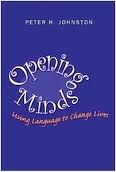
Last year I read Opening Minds and Choice Words by Peter Johnston and participated in the #CyberPD online discussion about Opening Minds - click here to read my posts.  After reading the book and discussing it with others online, I told myself that I was going to eliminate comments such as, "Great!"; "Good job!"; "Excellent!"because they are types of praise that are not specific and do not promote learning.  I know most of us can probably admit to using these comments in our classrooms at some point.  I am probably still guilty of using them, even when I vowed not to after reading Opening Minds.  I try to always be aware of my word choice and catch myself, but I may still use them without even noticing.
 For the past few weeks, I personally experienced what it feels like to be on the receiving end of these comments because my pilates instructor uses them in her classes.  Each week, I go to pilates reformer classes at a nearby studio and as my pilates instructor walks around during class, she frequently says, "Perfect"; "You got it"; "Great job"; "Good job".  I didn't think anything of it until I received a "Good job" one day as she was near my reformer and then immediately said, "Perfect" to the woman across from me.  I could not help thinking, "What is she doing better than me to make it 'Perfect', while I am just doing 'good'?" Another time, she said, "Perfect" to me as she was near my reformer and now I kept thinking, "I wish she told me what I was doing to make it 'perfect' this time so I can make sure to do it like that all the time!" Receiving these comments made me think hard about how these comments must make our students feel and think.  This week, I paid even closer attention to my choice of words when giving feedback to students and did catch myself a few times - it is hard sometimes not to use these comments, but it is critical that we try to be more specific in our feedback.

We have to always be aware of the power our words have in the classroom and the meaning that is conveyed to our students.  For example, in Opening Minds, Peter Johnston wrote, "Saying 'I'm proud of you' to someone has the same effect as saying 'I'm disappointed in you.'" This made me realize that when we say, "I like the way..."  we are giving other students the impression that we don't like what they are doing and the feedback is in the form of a judgement.  Also if we say, "Good job" to one student but then say, "Excellent job" to another student, how does that make the first student feel?  I admit I am still faulty sometimes of using person-oriented praise and am going to continue to work extra hard to give productive feedback that is process-orientated in my classroom.

I am thinking of having an open conversation with my class this coming week about feedback/praise and ask them to reflect on what they feel and think about when they receive general comments like, "good job."  I am also thinking of asking them to help me continue to become stronger in giving specific, process-oriented feedback by asking me, "What makes it good vs. great or perfect?" if I ever give them a comment like that.  I want them to advocate for themselves and call me out on it because I want my feedback to help them grow as learners, instead of making them feel like they are doing something wrong because they received a "good job" when someone else was told they are doing, "great, excellent, or perfect."  

I'd love to hear your thoughts and about any strategies you use that help you give specific feedback to students that is process-orientated instead of the general praise.  


#Slice 2013: 2 of 31


For the month of March, I am joining up with many bloggers and committing to daily writing, participating in the daily Slice of Life Challenge. I have written a longer story today, one that I was inspired to write from a story that I hear on NPR. The ending doesn't make me happy, but I'm thinking about it and I will re-visit it, I'm sure. I'm also sure that I won't be writing such long entries every day, but it's Saturday morning and I have both a story and time. Thank you so much to Jen and Stacy at twowritingteachers.wordpress.com for hosting the event. You can link up to their website and see what other bloggers have written for the day, as well.


As we approached the registers at the grocery store, my mother scanned the lines to try to figure out which one would be the shortest. Even though I know that she enjoys skimming through the current People magazine, I also knew that she was rushing because she had to pick up my sister and make it to a meeting.
“Let’s get in this line,” she said and guided the cart into register 4. I recognized the woman who was ringing up the groceries.  She was usually friendly and wore a nametag that said Nancy on her shirt.
I don’t think that Mom had paid attention to the woman who was ahead of us in time. She was old and she definitely was not moving fast. Mom realized this too late because another person came right behind us in the line. Our cart was stuck and we were staying in Line 4.
Mom looked at her watch and her list.
“I forgot the Special K,” Mom said. “Clare, can you start unloading and I’ll be right back.”
There was not much room on the counter for any of our groceries because the old lady was still taking her items out of her cart.
A box of corn flakes. On to the counter.
A small container of cream on to the counter.
A container (small size) of blueberries.
A muffin.
A frozen bag of peas.
Cat food. There still wasn’t room on the counter and she still had a few items in her cart. You can actually tell a lot about a person from what they buy at the grocery store.
“How is your cat, Willa?” Nancy asked.
Willa smiled and stopped unpacking. “She's old, too,” she answered. “She still jumps up on the counter when I’m not watching, though.”
Nancy stopped ringing and laughed. “Mine does the same thing,” she said. “I end up with paw prints on my counters that I’m constantly wiping.”
“These are the best sponges for wiping the counters,” Willa said. She reached in and pulled out her package of sponges. They were the same ones that my mother usually buys.
My mother came back, squeezing past the cart behind us and she placed the box of cereal on top of my pile. It slid down on to Willa's side of the groceries.
"Here you go," Nancy said, placing the cereal back on our side. She went on ringing.
 Mom looked again at her watch. She must have been wondering why I had not put our groceries up but she was figuring it out.
"Can I help you with your groceries?" Mom asked.
Willa looked at Mom and smiled. "Aren't you nice," she said.
I smiled, pretending to study the rows of gum. Yes, Mom was being nice, but she really wanted to just speed things up. She wasn't too effective because Willa and Nancy took the opportunity to really start talking now.
"My Lily loves my cat," Willa said. She pulled out a picture of a toddler and held it out to Nancy.
"She's adorable." Nancy took the picture and held it up closely. "How old is she now?"
She continued to look at the picture and then the next one that Willa handed to her, asking questions and making statements. Nancy did not seem to notice the pile that was growing at the edge of the grocery divider. "Where does she live?"
Mom had unloaded the rest of Willa's grocery and Nancy looked up at the pile.
"Oh, dear, Willa," she said. "I need to ring and get on to the next customers."
Willa smiled. "You do," she agreed. "It was so nice talking to you, though."
Nancy helped Willa put the bags in her cart and then called for one of the high school boys who was working in other aisle to come and help Willa to her car.
"I'll tell you what," Nancy said. "You look out for me. I'll be over later and you can finish the story about Lily."
Willa looked ten years younger. She looked like the type of lady who was going to go home and bake scones and set the table with an elaborate tea setting.
Once Willa left, my mom helped bag as Nancy rang. We were going to be late to pick up my brother and I hoped that her meeting wasn't too important.
"Is Willa a neighbor?" she asked Nancy, packing up the eggs, the item that she always saved for last.
"No." Nancy shook her head and smiled without showing her teeth. "I just met her now. Her husband died last week and she is lonely. Such a nice person, but lonely."
My mom paused, almost seemed to freeze for an instant and I wasn't sure what she was going to say. Then, she surprised me.
"You are a lovely person, Nancy," she said.
She signed the slip and we left.
"Are we late, Mom?" I asked.
"A little," she said, "but no worries. Let's take your brother for ice cream before going home and unpacking."


Friday, March 1, 2013

#slice 2013: 1 of 31


For the month of March, I am joining up with many bloggers and committing to daily writing by participating in #Slice 2013 for the first time. The Tuesday Slice of Life is hosted by Two Writing Teachers, Stacey and Ruth and during March, they host a daily writing challenge. Because so much of my writing throughout the year in professionally oriented, I am going to try to write more creatively during the challenge. I have several stories that I have been nurturing in my imagination so this month, I will be working them out of my head.


My dad loves to go for rides with me and he has many opportunities to come along since I have four busy, over-scheduled daughters and we have an unusual living situation where we have combined households with my parents.

He doesn't pay attention to much but he does listen for when anyone is going for a ride.

"You going some place?" he asks. "Would you like company?"

As the "company", he hardly ever talks when he is in the car and I don't know why he enjoys the rides so much. He sits in the passenger seat with his legs crossed. He folds his hands unless we are going around a corner. At corners, he holds onto the bar, sometimes even with two hands. Sometimes, I tease him about that, but only gently.

"Am I worrying you?" I ask.

He smiles and lets go with one hand. "Nope," he says. "Just holding on."

He hasn't driven for several years now. Sometimes, he offers to drive, but mostly, just gets into the passenger seat--business, as usual. He does like to help, though. When he does talk on our drives, it's to tell me that I'm clear to the right.

"All clear this way," he says.

I always check. He is accurate in his reporting.

Isn't it funny that I miss him the most when we are driving and he is sitting in the passenger seat next to me?